Finepack journal
Vacuum Packing vs MAP Packaging: Which Is Right for Your Business?
When it comes to extending shelf life and preserving product quality, Vacuum Packing and Modified Atmosphere Packaging (MAP) are two of the most widely used technologies in food and industrial packaging. While both aim…
10 February 2026
When it comes to extending shelf life and preserving product quality, Vacuum Packing and Modified Atmosphere Packaging (MAP) are two of the most widely used technologies in food and industrial packaging. While both aim to protect products from spoilage, they work very differently and suit different applications.
At Ace Finepack Private Limited, we help customers choose the right technology based on product type, shelf-life requirements, and production scale.
Let's break it down.
What Is Vacuum Packing?
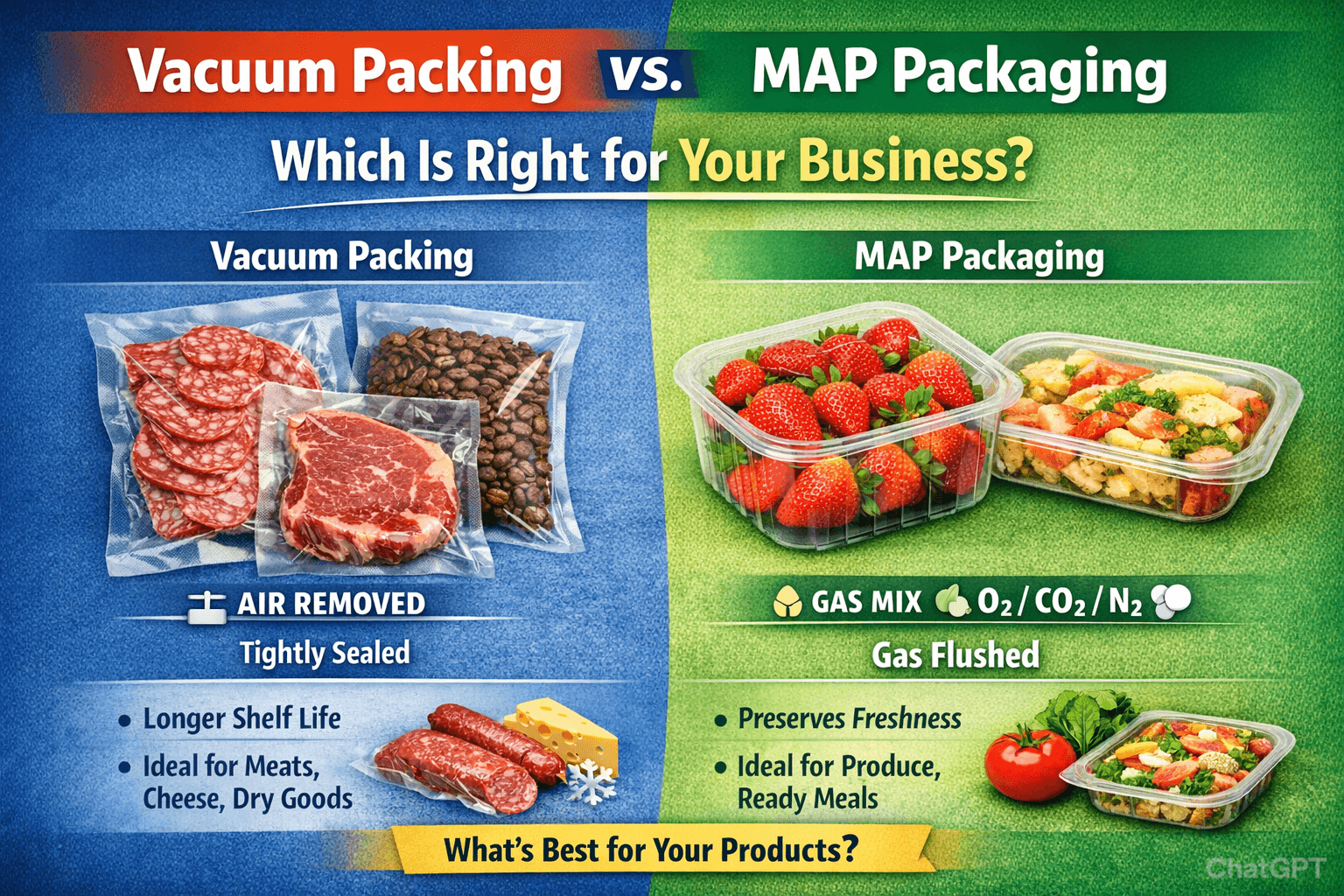
Vacuum packing removes almost all air (oxygen) from the package before sealing. By eliminating oxygen, it slows oxidation, bacterial growth, and moisture damage.
Key Characteristics of Vacuum Packaging
- Removes air completely from the pack
- Tight, compact packaging around the product
- Uses vacuum chamber or external vacuum machines
- Ideal for solid and semi-solid products
Common Applications
- Fresh meat, poultry, seafood
- Cheese and dairy products
- Ready-to-cook foods
- Dry foods (nuts, grains, spices)
- Industrial components and metal parts
What Is MAP (Modified Atmosphere Packaging)?
MAP replaces the air inside the package with a controlled gas mixture (typically CO₂, N₂, and sometimes O₂). Instead of removing all oxygen, MAP carefully adjusts gas levels to slow spoilage while maintaining product appearance.
Key Characteristics of MAP Packaging
- Air is replaced with food-grade gases
- Maintains product shape and appearance
- Requires gas flushing and specialized sealing systems
- Common in retail-focused packaging
Common Applications
- Fresh fruits and vegetables
- Bakery products
- Fresh meat in retail trays
- Ready-to-eat meals
- Fresh pasta and salads
Vacuum Packing vs MAP Packaging: Side-by-Side Comparison
| Feature | Vacuum Packing | MAP Packaging |
|---|---|---|
| Oxygen Removal | Almost 100% | Controlled reduction |
| Shelf Life Extension | High | High (product-specific) |
| Product Appearance | Tight, compressed | Natural, presentable |
| Equipment Cost | Lower | Higher |
| Operating Complexity | Simple | Moderate to High |
| Packaging Speed | Medium | High (automatic lines) |
| Gas Requirement | No | Yes (CO₂ / N₂ / O₂) |
| Best For | Bulk, export, storage | Retail display |
Which Packaging Is Better for Shelf Life?
- Vacuum packing offers maximum shelf life extension, especially for meat, seafood, and processed foods.
- MAP packaging offers balanced shelf life with better visual appeal, making it ideal for supermarket and retail products.
If your priority is long storage, transport, or export, vacuum packing is usually the better choice. If your priority is retail presentation and freshness perception, MAP may be more suitable.
Cost Comparison: Vacuum vs MAP
Vacuum Packing
✔ Lower machine cost ✔ No recurring gas expenses ✔ Lower maintenance ✔ Faster ROI for small and medium businesses
MAP Packaging
✖ Higher initial investment ✖ Ongoing gas costs ✖ requires trained operators ✔ Higher throughput for large production lines
For many SMEs, vacuum packing delivers the best cost-to-benefit ratio.
Vacuum Packing or MAP: How to Choose?
Choose Vacuum Packing if:
- You want maximum shelf life
- Products are bulk or export-oriented
- Budget and simplicity matter
- You handle meat, seafood, or dry foods
Choose MAP Packaging if:
- Product appearance is critical
- You supply retail chains
- High-speed automated lines are needed
- You pack fresh produce or bakery items
Expert Guidance from Ace Finepack
Selecting the right packaging technology is not just about machines — it's about application fit. At Ace Finepack, we supply reliable vacuum packing solutions and help customers evaluate whether vacuum or MAP is right for their business today and in the future.
If you're planning to invest in vacuum packaging machines or advanced food packaging solutions, our team will guide you with:
- Product trials
- Application analysis
- Machine selection
- Long-term service support
📞 Talk to Ace Finepack today to choose the right packaging technology for your business.